VPN for Torrenting and P2P: A Practical Guide
Key points
- In P2P, every peer can see your IP address unless a VPN hides it.
- A VPN keeps your internet provider from seeing your P2P activity.
- A VPN never makes piracy legal; copyright law applies the same way.
- A dropped tunnel can expose your real IP, so a kill switch matters.
On this page
- Why P2P Exposes Your IP Address
- What a VPN Changes for P2P
- The Line We Will Not Cross: P2P Is Not Always Legal
- What Your ISP and Peers Can See
- Settings That Matter for P2P
- Our Honest P2P Stance
- What a VPN Does Not Do for P2P
- Speed and Long Sessions
- Setting Honest Expectations
- The Two Settings That Actually Matter for P2P Privacy
- Summary
- Frequently asked questions
Peer to peer file sharing, often called torrenting, works differently from normal browsing. Instead of talking to one server, your device connects to many other people at once, swapping pieces of a file. That design has a privacy cost built in, and it is the main reason people pair P2P with a VPN.
This guide is practical and honest. We will explain what peers and your internet provider can see, what a VPN changes, the settings that matter, and the one line we will not blur: a VPN does not make piracy legal. If VPNs are new to you, start with our introduction to VPNs.
Why P2P Exposes Your IP Address
In a normal connection, a website sees your address and that is the end of it. In P2P, you connect directly to dozens or hundreds of strangers, and each of them can see the IP address you are connecting from. That is how the protocol works. The peers need an address to send data to.
So without any protection, your home IP address is visible to every peer in a swarm, including ones you know nothing about. That address points to your rough location and ties back to your internet account. Our guide to what an IP address is explains why that is more revealing than it sounds.
What a VPN Changes for P2P
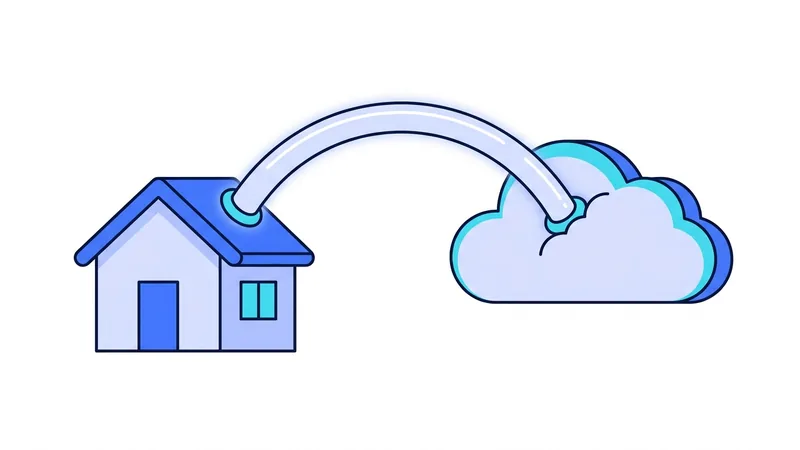
A VPN addresses that exposure in a direct way. Your traffic flows through the VPN server first, so the peers you connect to see the server's shared address instead of your home one. Your real IP stays out of their view.
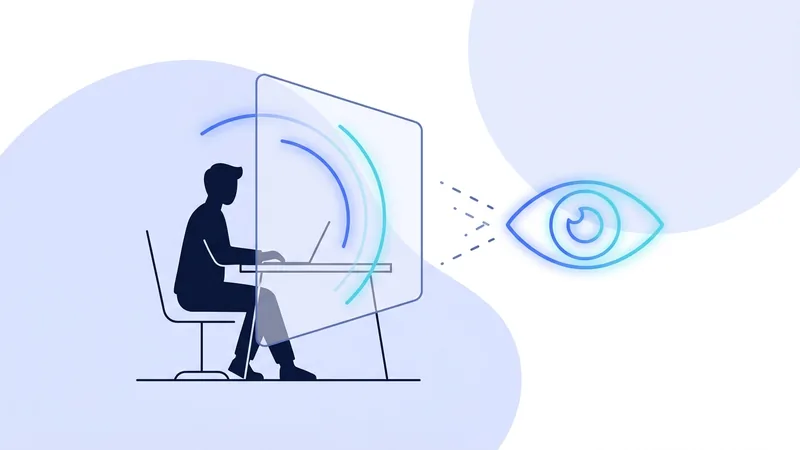
It also hides the activity from your internet provider. Without a VPN, a provider can often tell you are running P2P and may act on that. With a VPN, the provider sees an encrypted stream to one server and nothing about the protocol inside. The mechanics are covered in our guide to how VPNs work. None of this makes you invisible, though, which is the next point.
The Line We Will Not Cross: P2P Is Not Always Legal
This part is not negotiable, so we will say it plainly. P2P technology itself is legal and has plenty of legitimate uses, like distributing open software and large public data sets. But downloading or sharing copyrighted movies, music, games, or shows without permission is illegal in many countries.
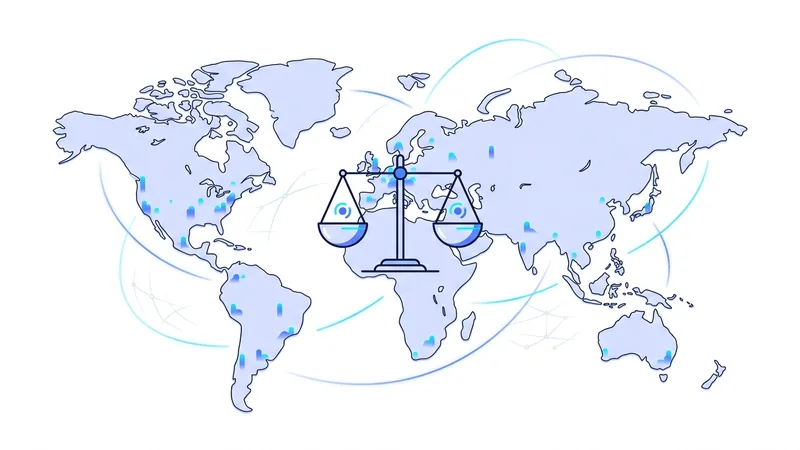
A VPN does not change that. It changes how your traffic travels, not what the law forbids. If an act is illegal without a VPN, it stays illegal with one. We cover this principle in our guide to whether VPNs are legal, and it is the same idea here: the tool is legal, but it is not a license to break copyright law.
Tip: a VPN is a privacy tool, not a way to dodge the law. Use P2P for content you have the right to share, and keep your expectations about legal responsibility honest.
What Your ISP and Peers Can See
It helps to lay out exactly who sees what, with and without a VPN. The table below makes the difference clear.
| Who is watching | Without a VPN | With a VPN |
|---|---|---|
| Other peers in the swarm | Your real IP address | The VPN server's shared address |
| Your internet provider | That you are running P2P | An encrypted stream to one server |
| The VPN provider | Not involved | Connection metadata and routed traffic |
| Copyright law | Applies fully | Applies fully, unchanged |
Read the last two rows together. A VPN moves trust to the provider, and it does not touch the law. Our VPN privacy guide explains why "you move trust, you do not remove it" is the honest way to think about any VPN.
Settings That Matter for P2P
P2P transfers are different from browsing because they run for a long time, sometimes hours. That changes which settings matter most. The big one is the kill switch. If your tunnel drops mid transfer and you have no kill switch, your client can keep going on the open connection and leak your real IP to every peer. A kill switch blocks all traffic until the tunnel returns, which protects you during those long sessions.
Two more things help. Make sure your DNS lookups travel inside the tunnel, since a leak there can reveal activity. And prefer a server location that gives you good speed, because P2P benefits from bandwidth. You can compare options on our server locations page.
Our Honest P2P Stance
We treat P2P like any other traffic: it is your connection, and we encrypt it and hide your IP from the parties on the other end. We do not monitor what you transfer, because we never store browsing activity or traffic contents. What we will not do is pretend a VPN turns illegal sharing into something legal, or promise to shield you from the consequences of breaking copyright law.
That honesty cuts both ways. The privacy benefit for P2P is genuine, and the legal responsibility is genuinely still yours. We publish how we operate on our transparency page so you can judge our practices for yourself.
What a VPN Does Not Do for P2P
It is worth being clear about the limits, the same way we are with any use case. A VPN does not make you anonymous. It hides your IP from peers and your activity from your provider, but the VPN company still routes your traffic and can see connection metadata. Choosing a provider you trust is part of the deal, not an optional extra.
A VPN also does not protect your device from anything inside the files you transfer. A downloaded file can carry malware regardless of how it traveled, and the VPN does not scan it. Keep your system updated and be cautious about what you open. And a VPN does nothing about your accounts: if you sign in to a service while transferring, that account identifies you no matter what your IP looks like.
Speed and Long Sessions
P2P benefits from bandwidth and runs for a long time, so a few practical choices make the experience better. Pick a server with good capacity and a reasonable distance from you, because a crowded or far-off server slows transfers noticeably. Use a fast modern protocol so the encryption step costs as little as possible.
Because sessions are long, stability matters more than for normal browsing. A connection that drops briefly during a quick web search is no big deal, but during a multi-hour transfer it can mean a leaked IP if your kill switch is off. Set the kill switch once, confirm it works, and then you can leave transfers running without watching them. That single setting turns a long P2P session from a risk into a routine task.
Setting Honest Expectations
Put the whole picture together and the message is balanced. A VPN gives P2P users a real privacy benefit: your IP stays hidden from peers, and your provider sees only an encrypted stream. It does not give you anonymity, it does not change copyright law, and it does not protect you from the consequences of breaking that law. Keep those two truths side by side and you will use the tool well.
The Two Settings That Actually Matter for P2P Privacy
Most advice about VPNs for torrenting buries the two settings that really make a difference. With vpn.now, the first and most important one is the kill switch. A kill switch watches your connection and cuts off all internet traffic the moment the VPN drops, even for a second. This matters for P2P because torrent clients are constantly sharing your address with other people in the swarm. If the VPN blinks off without a kill switch, your real IP can leak to everyone you are connected to. Before you start any download, open your settings and confirm the kill switch is turned on. It is the single best habit for keeping your real address out of the swarm.
The second setting is port forwarding, and it is optional. Port forwarding can improve how easily other peers can reach you, which can help your seeding ratio if you upload a lot. Not every provider offers it, and it does not change much for casual downloaders. There is also a small trade-off: an open forwarded port is one more thing exposed to the outside, so it carries a minor privacy cost. If you are a heavy seeder it may be worth it. If you are not, you can safely leave it off.
One honest point about the law. A VPN protects your privacy on the network, but it does not make downloading copyrighted material legal. Sharing copyrighted files without permission can still bring legal consequences, no matter what tools you use. P2P itself is a normal, useful technology with plenty of legal uses, such as:
- Downloading Linux distributions and other open-source software
- Sharing large open data sets and research files
- Getting game patches and updates that ship over P2P
- Spreading public-domain books, music, and video
Summary
- P2P exposes your IP address to every peer you connect to by design.
- A VPN replaces your real IP with a shared server address and hides activity from your provider.
- A VPN never makes piracy legal. Copyright law applies the same with it on or off.
- Peers see the server address, your provider sees an encrypted stream, the law is unchanged.
- A kill switch matters because long P2P sessions can leak your IP if the tunnel drops.
- Our stance is honest: real privacy benefit, and the legal responsibility stays with you.
If you want a provider that is upfront about all of this, you can start with our free VPN plan and read the limits in plain language first.