Are VPNs Legal? A Plain Country by Country Look
Key points
- VPNs are legal to use in most countries around the world today.
- A small number of countries ban or restrict VPN use, so check before you travel.
- A VPN never makes an illegal act legal; the same laws still apply.
- Rules change over time, so verify the current law for any country you visit.
On this page
Ask whether a VPN is legal and you will find scary headlines on one side and calm reassurance on the other. The truth sits closer to the calm side, with a few real exceptions worth knowing. For most people, in most places, using a VPN is a normal and legal thing to do.
This guide gives you the honest picture. We will look at the broad pattern around the world, the small group of countries with strict rules, why those rules exist, and the one principle that holds everywhere. If you are brand new to the topic, our plain English guide to what a VPN is covers the basics first.
The Short Answer
In the large majority of countries, using a VPN is legal. People use them for work, for privacy on public networks, and to keep their browsing away from their internet provider. Businesses rely on them every day. None of that breaks any law in those places.
A small number of countries treat VPNs differently. Some ban them outright. Some allow only government-approved services. Some leave the law unclear. Even in those places, the issue is usually the VPN itself, not the act of caring about privacy.
There is one rule that never changes, and it matters more than any country list. A VPN does not turn an illegal act into a legal one. We will come back to that, because it is the part people most often get wrong.
Why the Rules Vary So Much
VPN laws differ because countries disagree about who should control what people see and do online. In places with open internet rules, a VPN is just another network tool, like a firewall or a password manager. There is nothing to ban.
In places where the government filters the internet or watches traffic closely, a VPN works against that control. It hides browsing destinations from the network and changes the IP address that sites see. A government built around monitoring naturally views that tool with suspicion. To understand what your provider can and cannot see in the first place, our guide to what your ISP sees is a useful companion.
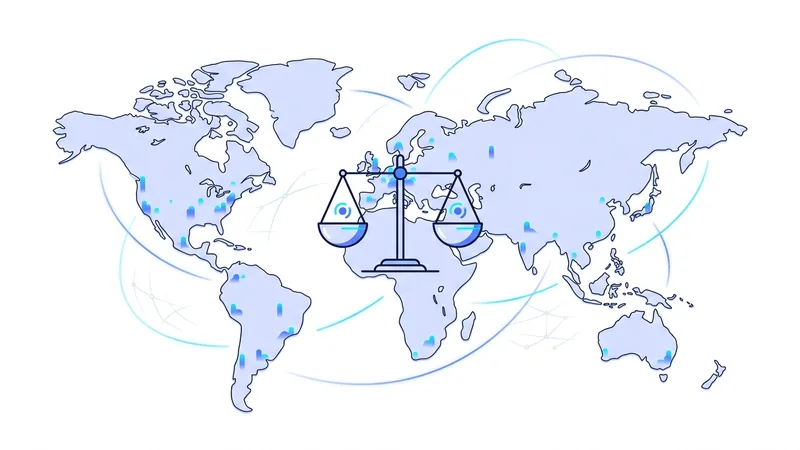
So the map of VPN legality is really a map of internet control. The stricter a country is about online speech and access, the more likely it is to restrict VPNs too.
A Country by Country Pattern
It is not practical to list every nation, and the details change, so think in groups instead. The table below shows the common pattern. Treat it as a starting point, not legal advice, and always confirm the current law for a specific country before you rely on it.
| Group | Typical status | What it means for you |
|---|---|---|
| Most of Europe, the Americas, and much of Asia-Pacific | Legal | Using a VPN is normal and allowed for privacy and security. |
| Countries with heavy internet filtering | Restricted or approved-only | Only government-approved VPNs may be permitted, or use may be limited. |
| A few of the strictest states | Banned or heavily penalized | VPN use may carry fines or worse. Research carefully before traveling. |
| Anywhere, regardless of group | Illegal acts stay illegal | A VPN never changes what the law forbids. |
Notice that the last row applies to every group. It does not matter whether VPNs are freely legal or tightly controlled where you are. The action you take through the VPN is still judged by the same laws.
The Rule That Holds Everywhere
Here is the principle worth remembering above all others. A VPN changes the path your traffic takes and the address websites see. It does not change the law. If something is against the law without a VPN, it is against the law with one.
That covers piracy, fraud, harassment, and anything else a country forbids. A VPN can make your activity harder for a network to observe, but it is not a shield from legal responsibility, and no honest provider will tell you otherwise. This is one of the ideas we tackle in our roundup of common VPN myths, because the belief that a VPN puts you above the law is both common and false.
Tip: before any international trip, search for the current VPN rules of your destination on an official or reputable source. Laws change, and a rule from two years ago may no longer be accurate.
Legal Does Not Always Mean Allowed
There is a difference between what the law permits and what a private organization permits. A VPN can be perfectly legal in your country and still break the rules of a place you connect from.
Workplaces often have network policies that forbid personal VPNs on company equipment, because their own security tools need to see traffic. Schools and universities sometimes do the same. Some streaming and banking services also discourage VPN use in their terms, which is a contract matter, not a criminal one.
So before you connect at work, school, or on any managed network, check the policy. Breaking a policy is not the same as breaking the law, but it can still cost you access or your account. When privacy is your goal, our VPN privacy guide explains what a VPN actually does and does not hide, which helps you set realistic expectations.
Traveling With a VPN
If you travel often, a few habits keep you on the right side of the rules. First, learn the law of your destination before you arrive, not after. Second, remember that app stores in some countries remove VPN apps, so install what you need before you cross the border. Third, keep your expectations honest about what a VPN can do once you are there.
For most travelers, the practical reason to run a VPN is the same as at home: encrypting traffic on hotel, airport, and cafe networks you do not control. That use is legal in the vast majority of destinations, and it is the most useful thing a VPN does on the road. Our piece on choosing the right service, how to choose a VPN, covers what to look for if you need one that works reliably while you move between networks.
What This Means in Practice
Put together, the situation is simpler than the headlines suggest. In most of the world, you can install and use a VPN without a second thought. In a small set of countries, you need to research the rules first, and in the strictest places you may need to avoid VPN use entirely while you are there.
And everywhere, without exception, the VPN is a privacy and security tool, not a license to break the law. Keep those two ideas separate and the whole topic becomes clear.
Legal to Use, but Against the Rules: Workplaces, Schools, and Services
There is an important difference between something being illegal and something simply breaking a rule you agreed to. In most countries a VPN is legal to use. But legal does not mean every place has to welcome it. Your employer, your school, and the websites and apps you use can each set their own rules. A VPN can be perfectly fine under the law of your country and still go against one of those private rules.
The key point is what happens if you break a private rule. These are not crimes, so you will not be arrested or fined by the government. The consequences come from the organization itself. They are usually things like:
- Losing access to a work or school network
- Having an account suspended or closed
- Facing workplace discipline for ignoring an IT policy
- Getting blocked from a website or app you wanted to reach
So the honest guidance is simple. Read the policy that actually applies to you. Your job may have an IT policy, your school may have an acceptable use policy, and most services have terms of service. Do not use a VPN to get around rules you already agreed to follow. If you are not sure, ask. It is better to check first than to lose your account or your network access later.
It also helps to understand why some services block VPN traffic at all. When a bank or a streaming site refuses to load over a VPN, it is enforcing its own terms, not the law. You are not doing anything criminal by trying. The service has simply decided how it wants to be used. Knowing that difference keeps your expectations calm and realistic.
Summary
- VPNs are legal to use in the large majority of countries around the world.
- A small number of countries restrict VPNs to approved services or ban them outright.
- Restrictions usually track how tightly a country controls the internet.
- A VPN never makes an illegal act legal. The same laws apply with it on or off.
- Legal is not the same as allowed. Check workplace, school, and service policies too.
- Laws change, so verify the current rules for any country before you travel.
If you want a service that keeps things honest about what it can and cannot do, you can start with our free VPN plan and read the limits in plain language before you commit to anything.